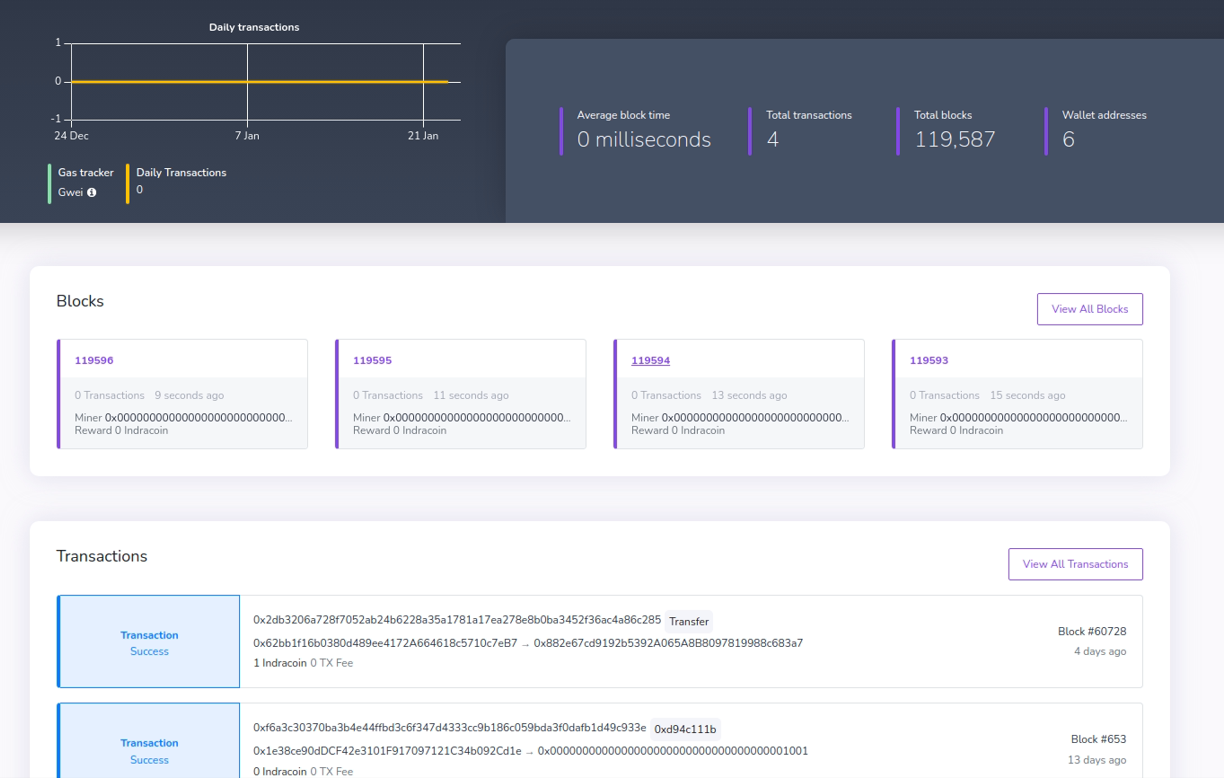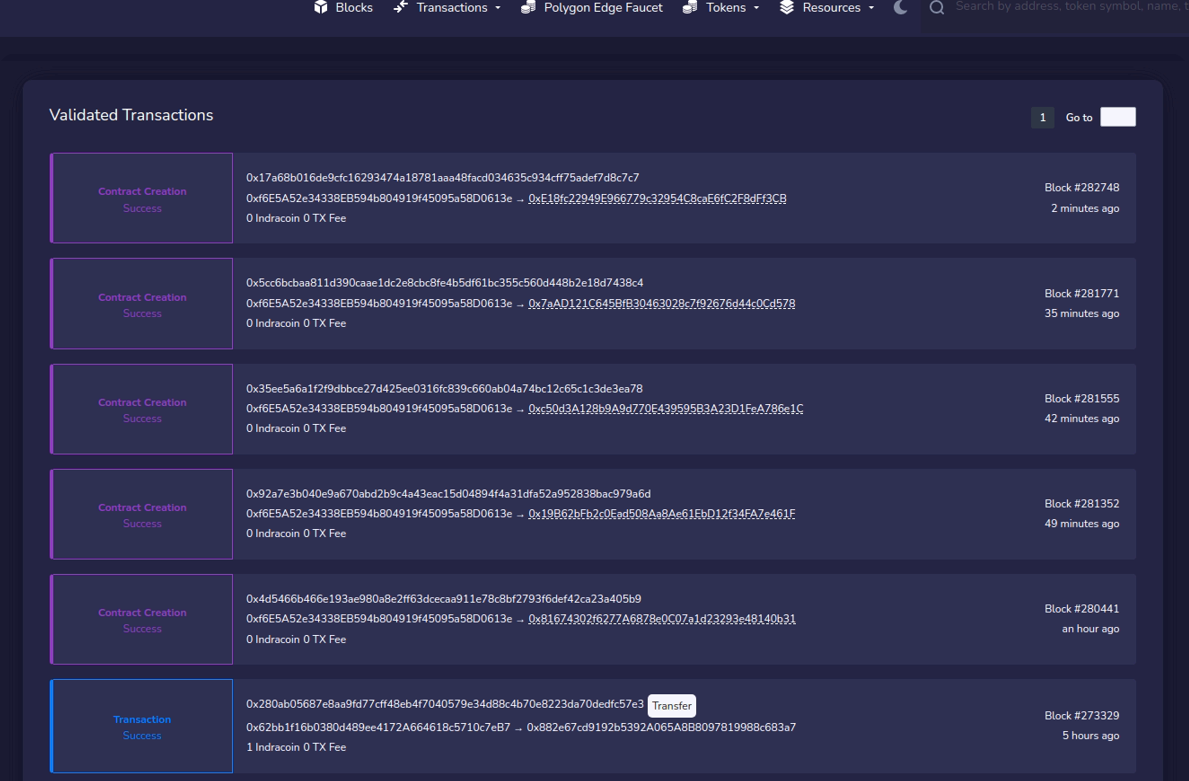
Valuecoders was approached by a client seeking a public blockchain setup with a PoS consensus mechanism and five physical nodes. Our proposed solution involved a PoS-based blockchain where participants stake cryptocurrency holdings, ensuring energy efficiency, scalability, and enhanced network reliability.
It is a Public Blockchain set up in which our team implements 5 physical blockchain nodes on a POS consensus mechanism.
Public blockchains that use Proof of Stake (PoS) as their consensus mechanism has gained popularity in recent years due to their energy efficiency and scalability compared to Proof of Work (PoW) blockchains like Bitcoin.
PoS blockchains achieve consensus by allowing participants to “stake” their cryptocurrency holdings as collateral to validate transactions and create new blocks.
The client required a hardware configuration including 16-32 GB of RAM, 8-16 core CPU (specifically c5.2xlarge for AWS), and a 6-8TB SSD storage (with the extendable capability).
| Key Challenges | Solutions |
| The implementation of the blockchain was halted due to incorrect repository implementation. | Raised a GitHub issue for personal assistance in polygon-edge blockchain implementation. |
| Blockscouts blocks did not Index. [The progress was stuck on 0%] | Researched and found a solution |
One of the key components of Polygon Edge is the Blockchain and State modules. The Blockchain handles block reorganizations and the logic associated with new blocks, while the State module manages state transitions when new blocks are added.
The Blockchain and State work closely together, facilitating a seamless functioning of the client. Additionally, Polygon Edge provides pre-built releases with AMD64/ARM64 binaries for Darwin and Linux platforms, enabling easy installation and configuration.
The blockchain network setup guide outlines the steps to establish a working Polygon Edge network using the IBFT consensus protocol, emphasizing the importance of validator nodes for block proposal and validation. The minimum recommended number of nodes for the BFT guarantee is four, ensuring network resilience.