Top Industry Use-Cases of AI
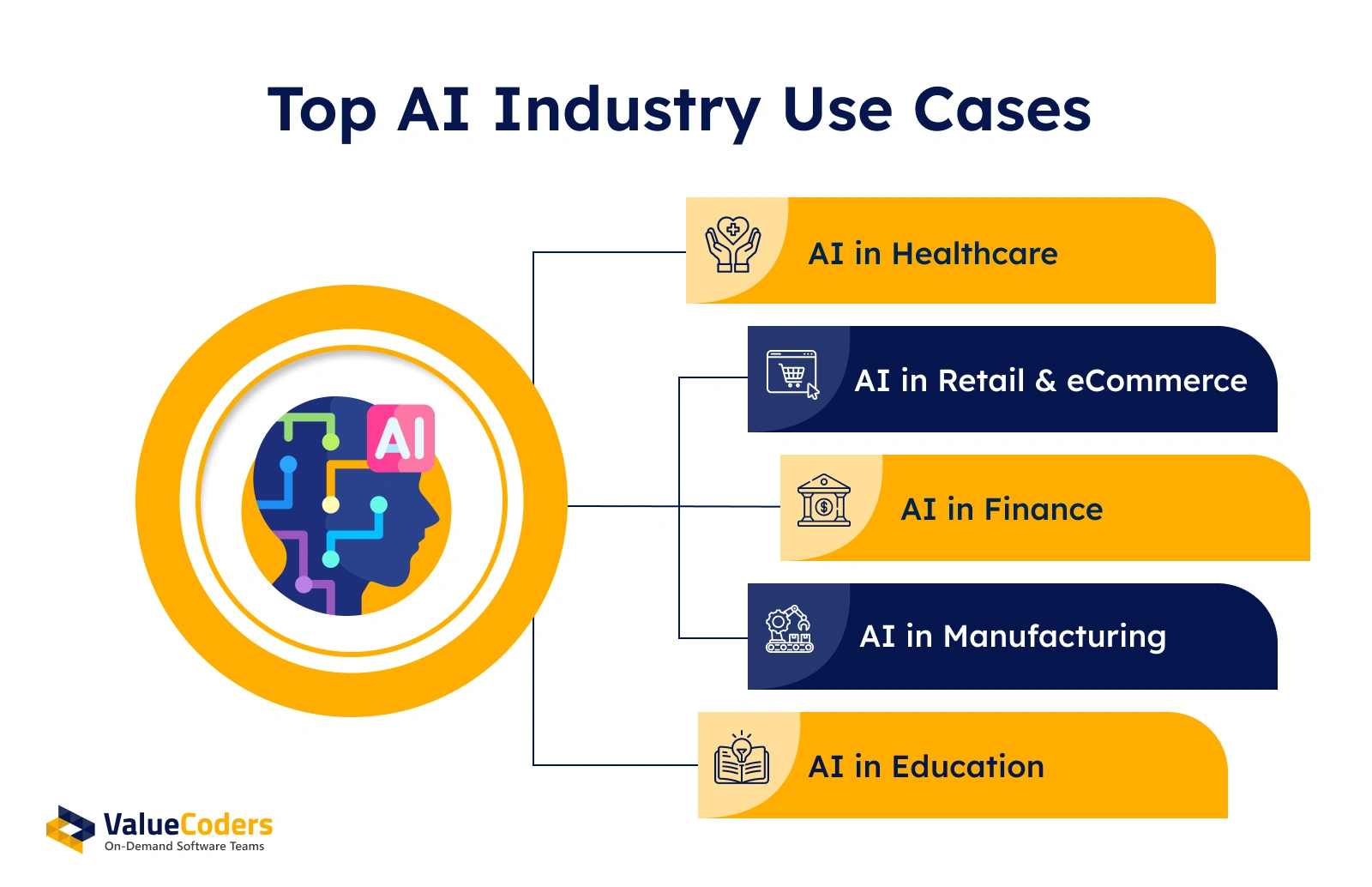
Artificial Intelligence is being used in many industries to solve real problems. It helps businesses work faster, avoid mistakes, and make better decisions.
Here are some examples of how different industries use AI today.
AI in Healthcare
AI-driven healthcare systems can improve accuracy, speed, and efficiency in diagnostics and treatment. Common use case include:
- Detecting diseases from medical images
- Organizing patient data from different departments
- Giving reminders for medicine and follow-ups
AI in Retail & eCommerce
Retail stores and online shopping sites use AI to give better service to buyers. AI use-cases in retail:
- Recommending products based on past purchases
- Predicting the right time to restock
- Answering customer questions through virtual agents
AI in Finance
AI is increasingly used in finance for fraud detection, identifying anomalies in financial transactions, and risk assessment. Popular uses in finance include:
- Finding unusual payment behavior
- Helping customers through smart chat support
- Speeding up loan approval checks
AI in Manufacturing
Factories use AI to keep machines working well and reduce delays. AI use in manufacturing:
- Watching machines for early signs of failure
- Planning supply needs and delivery times
- Checking product quality using cameras
AI in Education
Schools and learning apps use AI to help students learn better. Teachers also get help with marking and tracking performance. In education, AI is used for:
- Giving students tasks based on their skill level
- Creating quizzes automatically
- Tracking how well students are doing over time
Build vs Buy – When Should You Develop Custom AI Applications?
Most companies struggle with whether to build a custom AI system or buy an existing solution. The right choice depends on control, cost, compliance, and long-term value.
1. When Buying AI Makes Sense
Ready-made AI tools are ideal when your requirements are standard, such as OCR, transcription, sentiment analysis, or keyword extraction.
Buying is ideal if you need:
- Fast implementation
- Limited customization
- Lower upfront cost
- Minimal maintenance
2. When Custom AI Is the Better Investment
Build custom AI when you need:
- Industry or workflow-specific customization
- Proprietary features or competitive differentiation
- Integration with internal systems
- Private or on-prem deployment
- Compliance with sensitive data (health, finance, legal)
- Long-term scalability and cost control (no per-seat pricing)
3. Hidden Costs of Buying Off-the-Shelf
- Vendor lock-in
- Limited access to training data
- Inability to modify outputs
- Per-user or per-API billing that increases over time
- No control over model updates or roadmap
4. Long-Term ROI With Custom AI
Custom AI gives you:
- Full ownership of IP
- Lower long-term operational cost
- Higher accuracy on your domain data
- Seamless integration with internal workflows
- A scalable foundation for future use-cases
Conclusion:
Buying is great for speed. Building is essential for differentiation, long-term ROI, and enterprise security.
Challenges and Concerns in Implementing AI
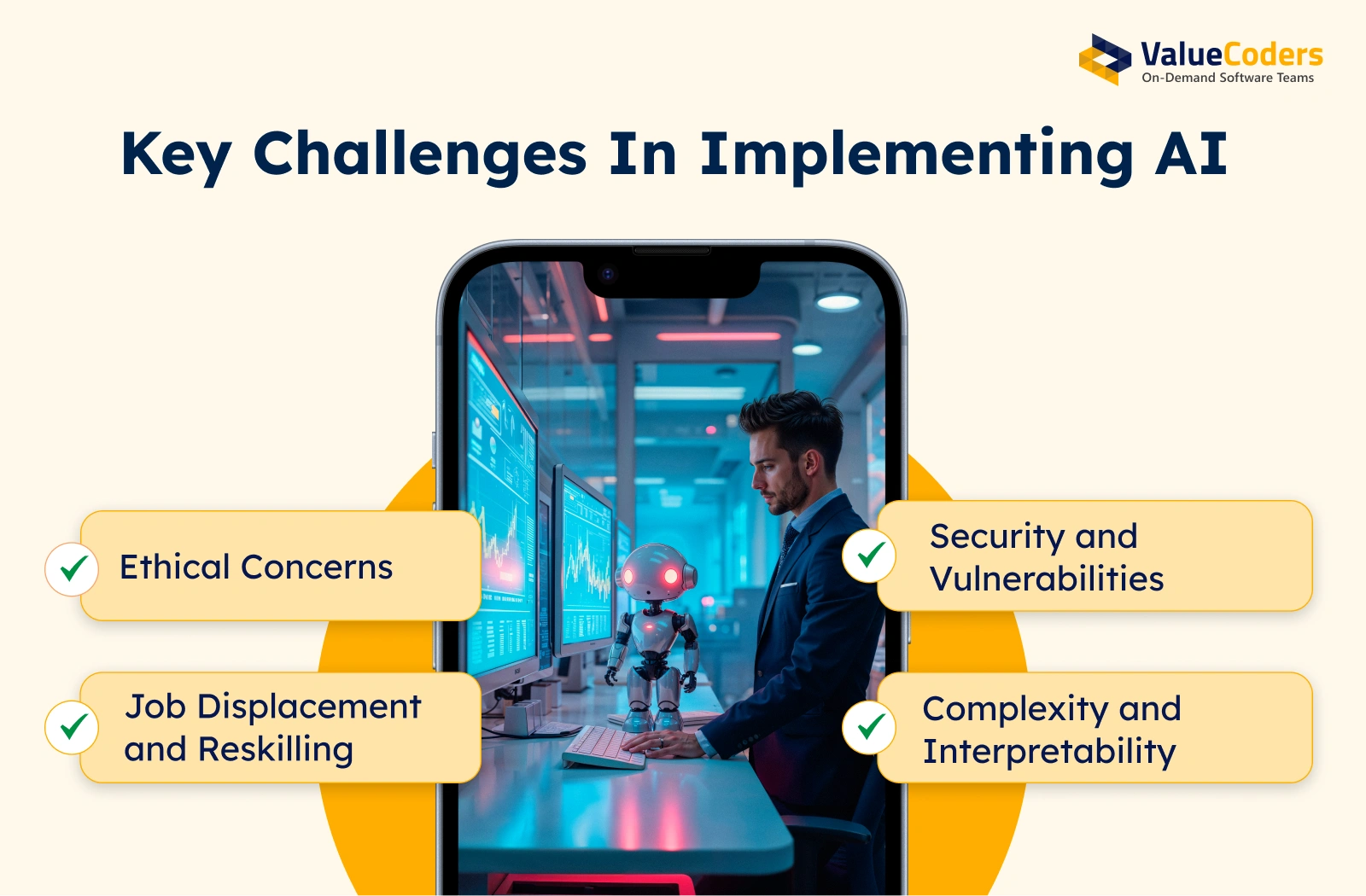
While AI offers transformative potential across industries, its integration into real-world operations is not without significant challenges.
Understanding these challenges is crucial for developing responsible, effective, and sustainable AI strategies.
Ethical Concerns
AI systems are vulnerable to biases present in the data used for training. This can lead to unfair and discriminatory outcomes, affecting certain demographic groups more than others. Addressing these biases and ensuring fairness is a significant ethical challenge in AI development.
Security and Vulnerabilities
AI systems may be vulnerable to attacks, such as adversarial attacks on computer vision systems or data poisoning attacks on machine learning models. Ensuring the security of AI systems and protecting against potential vulnerabilities is crucial.
Job Displacement and Reskilling
The widespread adoption of AI has raised concerns about job displacement, as some tasks previously performed by humans may become automated. Preparing the workforce for the AI era through upskilling and reskilling is essential to mitigate these concerns.
Complexity and Interpretability
Deep learning models, in particular, are complex and often regarded as black boxes, making it challenging to interpret their decisions. Developing explainable AI techniques is vital to understand how AI systems arrive at their conclusions and ensure transparency in critical applications.
Addressing AI Ethics
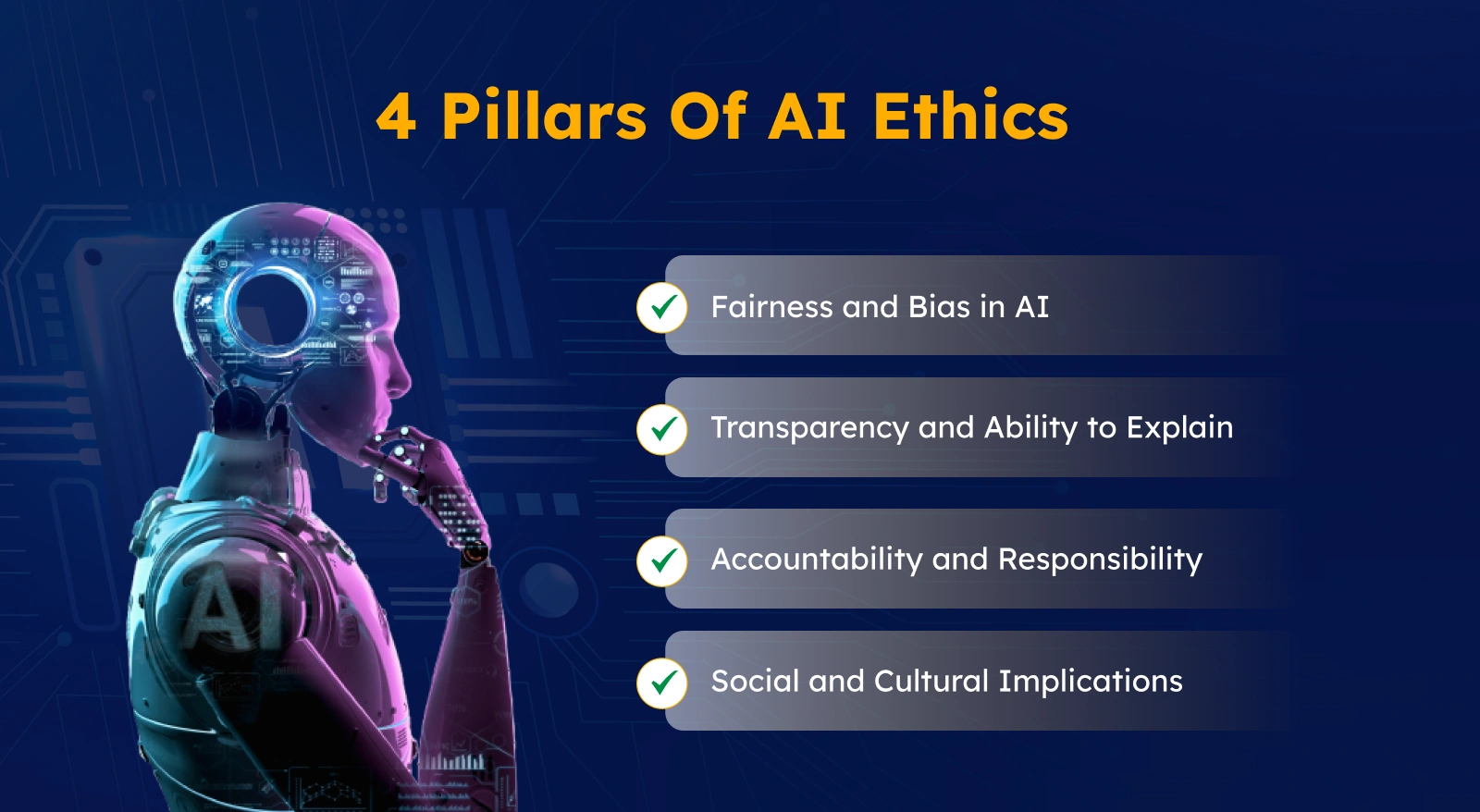
As artificial intelligence becomes increasingly embedded in decision-making processes, the importance of ethical considerations has grown significantly. Let’s learn how to address these AI ethics:
Fairness and Bias in AI
To address bias, developers must carefully curate training data and employ techniques that ensure balanced representation of different groups. Fairness-aware algorithms and audit mechanisms help mitigate bias in AI systems.
Transparency and Ability to Explain
AI models must be interpretable and explainable to build trust with users. Techniques like LIME (Local Interpretable Model-agnostic Explanations) and SHAP (Shapley Additive ExPlanations) provide insights into model decisions.
Accountability and Responsibility
AI developers and organizations must take responsibility for the consequences of their AI systems. Establishing AI ethics committees and adhering to ethical frameworks ensures accountability and ethical AI development.
Social and Cultural Implications
Developers need to consider the social impact of AI systems and involve diverse stakeholders in the development process. Ensuring AI applications are inclusive and beneficial to society is a crucial ethical consideration.
Top AI Adoption Strategies
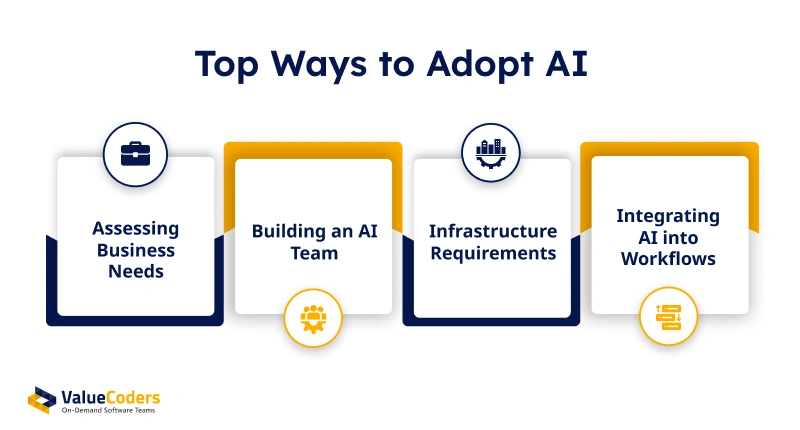
Successfully integrating AI into an organization requires a strategic approach tailored to specific goals, resources, and challenges.
The following strategies help organizations maximize the value of AI while minimizing risks and resistance.
Assessing Business Needs
Identifying areas where AI can provide the most value is the first step in AI adoption. Organizations should evaluate their existing processes and challenges to determine where AI can make a significant impact.
Building an AI Team
Developing AI capabilities requires skilled professionals, including data scientists, machine learning engineers, and domain experts. Organizations can build an in-house AI team or collaborate with AI development partners.
Infrastructure Requirements
AI development often requires significant computational resources, especially for deep learning models. Organizations must consider the infrastructure needed for AI training, such as GPUs or TPUs, and decide between cloud-based or on-premises solutions based on their specific requirements and budget.
Integrating AI into Workflows
Integrating AI systems into existing workflows can be a complex process. Organizations should plan for change management and properly train employees to ensure a smooth transition. Addressing any resistance to AI adoption among employees is essential for successful integration.
Measuring the ROI of AI Solutions
AI projects succeed when they deliver measurable business impact – not just technical achievements. Understanding ROI helps you justify investment, prioritize projects, and scale the right initiatives.
1. Define Clear Success Metrics Early
Metrics vary by use-case. Examples include:
- Reduced processing time
- Cost savings per task
- Increased accuracy
- Fewer manual errors
- Faster decision-making
2. Quantify Automation Impact
- Calculate time saved per task × number of tasks × frequency.
- AI often reduces manual work by 40–80%, enabling leaner teams.
3. Track Revenue-Influencing Metrics
For customer-facing systems like recommendations or chatbots, track:
- Conversions
- Average order value
- Retention
- Engagement rate
4. Measure Operational Efficiency
AI improves workflows across support, finance, HR, logistics, and IT.
Track:
- Reduction in backlog
- Faster resolution times
- Workflow throughput
5. Consider Long-Term Cost Reduction
- Custom AI reduces dependency on external APIs and per-seat licenses.
- This lowers recurring costs significantly over time.
6. Evaluate Model Performance vs. Business Outcomes
- High model accuracy doesn’t always translate to better business results.
- Ensure both technical and business KPIs are aligned.
Conclusion:
When tracked correctly, AI delivers measurable ROI through cost reduction, increased speed, higher revenue, better decisions, and improved customer experience.