Legacy system modernization can be difficult to execute. A Business Wire report report found that 74% of organizations failed to complete legacy system modernization projects, largely because of disconnects in priorities between technical and leadership teams.
This is why a robust strategy is required. The goal shouldn’t be to replace every application at once. Start by modernizing the right systems while keeping business operations running.
The right legacy modernization strategy helps businesses reduce risks and prepare applications for future needs. This guide explains the key approaches and how to choose the right one.
What a Legacy Modernization Strategy Should Cover
A legacy modernization strategy provides a clear way to evaluate legacy applications. It helps teams balance business priorities with technical needs.
The strategy helps decision-makers identify where modernization is needed. It also helps them choose the right approach and plan changes in the right order.
Before modernization begins, the strategy should answer four key questions:
- Which applications need attention?
- What business risk do they create?
- Modernize, migrate, replace, or retire?
- In what order should changes happen?
We help you identify modernization opportunities and build a roadmap that aligns with your business goals.
Why Enterprise Applications Need Modernization
Legacy applications can still support daily operations. But scaling and adopting new technologies can be challenging. Industry estimates suggest legacy system maintenance can consume up to 80% of IT budgets, leaving less room for innovation.
Modernization can help reduce long-term maintenance costs.
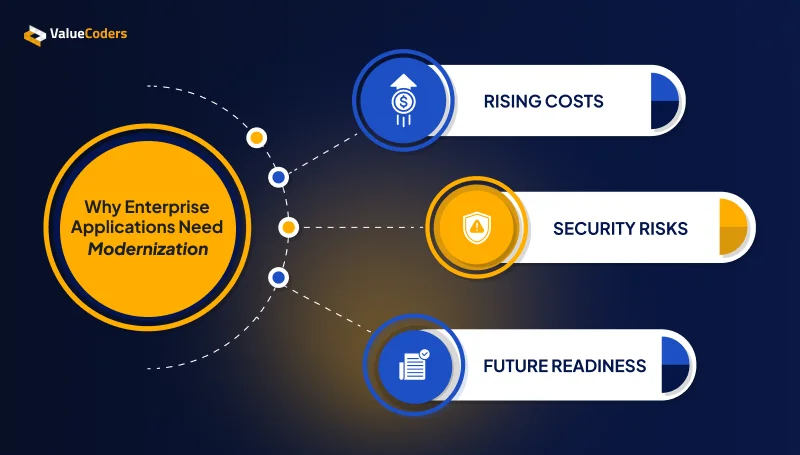
Rising Costs
Older applications need frequent updates and fixes. This increases maintenance costs and leaves less time for innovation.
Security Risks
Legacy systems often fall short of meeting today’s security and compliance standards. Furthermore, they can be difficult to scale as the business grows.
Future Readiness
Modern technologies like cloud and AI need flexible applications. A clear application modernization strategy helps businesses adopt these technologies with less risk.
Also Read: Why Do Modernization Projects Fail Before They Start?
Building an Effective Legacy Modernization Strategy
A successful legacy modernization strategy starts with application-level decisions. Teams need to understand where the biggest business and technical risks exist before choosing a digital transformation path.
Review Your Current Applications
Start by assessing each application across business value, technical health, dependencies, maintenance effort, and security. This helps identify systems that create the most risk or consume the most engineering capacity.
Focus on Business Priorities
Prioritize applications that directly affect revenue, customers, operations, or compliance. A critical system with high maintenance costs may need attention before a less important application with older technology.
Plan for the Future
Assess whether each application can support expected growth, new integrations, cloud adoption, and AI initiatives. This prevents teams from modernizing a system that will soon become another constraint.
Choose the Right Modernization Path
Do not move every legacy application to the cloud by default. Assess architecture, dependencies, data requirements, performance, and security first. Then decide whether to rehost, replatform, refactor, or use another approach.
Create a Clear Roadmap
Turn these findings into a prioritized modernization roadmap. Define dependencies, milestones, risks, ownership, and success measures. This supports a phased application modernization approach and helps teams modernize.
Prioritize applications, reduce risks, and modernize with a clear plan.
Common Enterprise Application Modernization Approaches
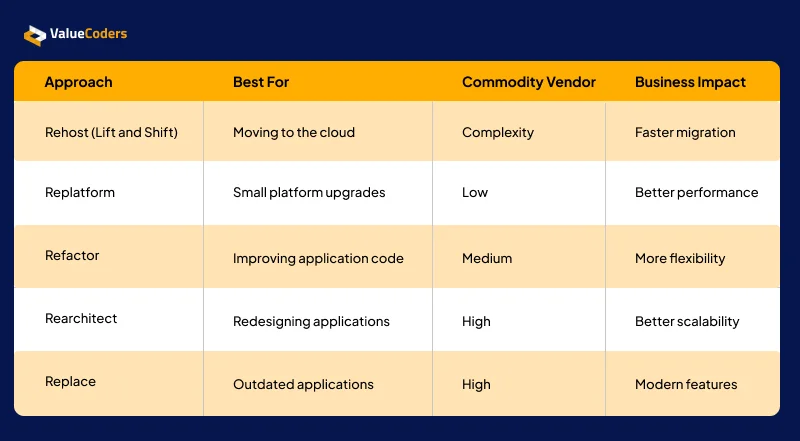
There is no single approach to enterprise application modernization. The right choice depends on your business goals, application complexity, and budget.
Rehost
Move the application with minimal changes.
Replatform
Move it to a newer platform while making limited architectural changes.
Refactor
Restructure the application to improve scalability, maintainability, or performance.
Replace
Replace the legacy application with a modern solution when rebuilding isn’t practical.
Retire
Remove applications that no longer provide sufficient business value.
Many businesses still rely on legacy applications for daily operations. These systems can become harder and more costly to maintain over time.
Avoid treating modernization as a technology-only project. Business priorities, dependencies, security, and rollout risk should shape the roadmap from the beginning.
Also Read: Why Legacy Systems are Slowing You Down and How to Modernize Them?
When to Consider Professional Application Modernization Services
Some modernization efforts are simple, but complex legacy systems often require expert guidance to avoid risks and delays.
You should consider Application Migration & Modernization Services when:
- Multiple legacy applications are interconnected.
- The systems support mission-critical operations.
- A cloud migration is part of the modernization plan.
- Internal teams lack specialized modernization expertise.
- The business needs to modernize without disrupting operations.
Work with experts to modernize enterprise applications with minimal disruption.
Conclusion
Legacy modernization isn’t about replacing old technology. It’s about deciding:
- Which applications need to change
- why they need to change
- how to modernize them without disrupting the business
The right way to do things is to look at the applications you already have.
If you have applications that’re not ready for modernization, you can use Application Maintenance Services to keep them safe and working while you figure out your plan for updating them.
At ValueCoders, we help businesses assess, modernize, and maintain enterprise applications with a focus on reducing risk and supporting long-term business goals.
Planning to modernize your legacy applications? Talk to our experts about assessing your application landscape and building a practical modernization roadmap.
Frequently Asked Questions
1. Can legacy systems be modernized without disrupting business operations?
Ans. Yes. It’s possible to modernize legacy systems without interrupting operations. You need careful planning, phased implementation, and proper testing.
2. What are the benefits of a phased modernization approach?
Ans. It reduces risks, controls costs, and allows sustained daily operations during modernization. It also allows teams to deliver improvements step by step.
3. How long does a phased application modernization project take?
Ans. It may take a few months or longer, depending on the size and complexity of your application. We can provide you an approximate timeline after reviewing your current application and changes you expect.
4. What are the biggest risks of a big-bang application rewrite?
Ans. A big-bang application rewrite can increase project risks, costs, and downtime. When comparing big-bang vs phased modernization, many businesses choose a phased approach because it offers greater flexibility and lower risk.
5. How do you prioritize legacy applications for modernization?
Ans. Review each application based on business value, technical condition, maintenance costs, and future business needs. This helps identify which applications should be modernized first.
6. How does phased modernization reduce migration risk?
Ans. Modernizing applications in smaller stages allows teams to test changes before moving forward. This helps identify issues early and reduces the impact on business operations.