


According to Atlassian’s 2025 State of Developer Experience Report, 90% of developers lose six or more hours every week to organizational inefficiencies. Engineering team capacity planning helps recover time by removing avoidable delivery friction.
As products grow, engineering teams take on more features, production support, customer requests, and technical debt. Without a clear understanding of team capacity, sprint goals become harder to meet, delivery slows down, and roadmaps become less predictable.
In this blog, you’ll learn what engineering team capacity planning is, how to identify capacity gaps, and the practical steps engineering leaders can take to keep sprint velocity on track.
Why Sprint Velocity Becomes Unpredictable
Sprint velocity measures the work a team completes in a sprint. It stays stable when the team has enough capacity. When any of these change, delivery becomes less predictable.

Resource Gaps
Growing products often increases the workload. New features, production issues, and customer requests compete for the same engineering time. When teams do not grow at the same pace, capacity starts falling behind.
Missed Sprint Commitments
Many teams keep the same sprint goals even when their capacity changes. This creates unrealistic plans and leaves work unfinished. Over time, sprint commitments become harder to meet.
Delivery Delays
Resource gaps affect more than a single sprint. They slow feature releases and delay product updates. They also make engineering resource management more challenging as priorities continue to change. This often reduces agile team velocity and affects roadmap execution.
What Is Engineering Team Capacity Planning?
Capacity planning isn’t about estimating more work. It’s about protecting sprint commitments when priorities, availability, and product complexity keep changing. This helps teams make realistic plans instead of ambitious ones.
Many teams plan work before checking their actual capacity. This often creates unrealistic sprint goals. As a result, work carries over into the next sprint, and delivery slows down.
Good engineering team capacity planning starts with understanding your software development team capacity.
It also helps teams:
- Set realistic sprint goals
- Balance workloads across the team
- Reduce delivery risks
- Improve planning accuracy
- Support predictable product delivery
Capacity planning should be reviewed before every sprint because team availability changes. Planned leave, support work, and changing priorities can reduce the team’s available capacity.
Also Read: Why Leading Enterprises Trust Offshore Engineering Teams to Scale Fast
Signs Your Engineering Team Is Running Out of Capacity
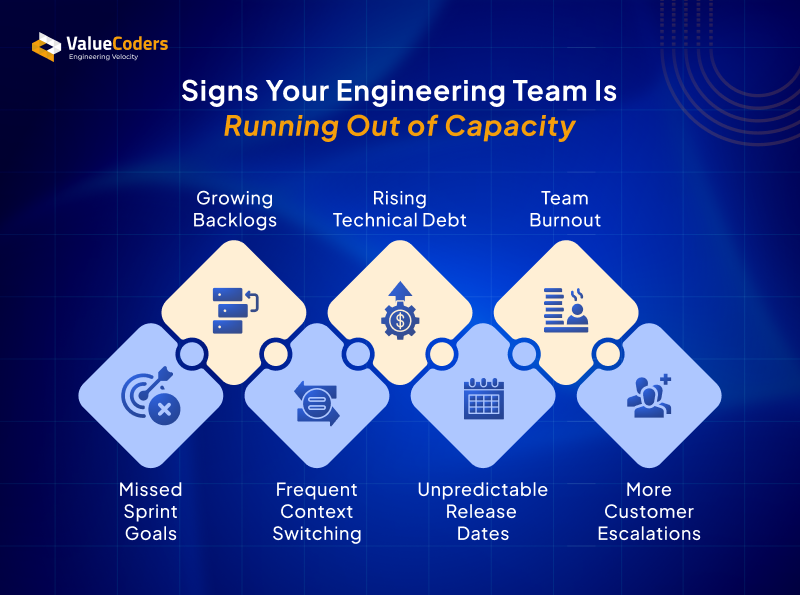
Engineering teams usually do not run out of capacity all at once. The signs appear slowly and become more noticeable over time. Spotting them early helps teams solve problems before they affect delivery.
Missed Sprint Goals
Missing sprint goals again and again is a sign that your team has too much work. Some tasks stay unfinished and move to the next sprint.
Growing Backlogs
A backlog should get smaller as work gets completed. If it keeps growing, your team cannot finish work as fast as new work arrives.
Frequent Context Switching
Developers spend significant time on unplanned work and context switching. Moving between new features, bug fixes, and support work slows progress.
Rising Technical Debt
Quick fixes may solve problems for now. Relying on them too often creates technical debt and makes future development harder.
Unpredictable Release Dates
Release dates become harder to plan when sprint work is delayed. Small delays often lead to project delivery delays.
Team Burnout
Heavy workloads put constant pressure on the team. Over time, productivity drops and morale suffers.
More Customer Escalations
Delayed features and unresolved issues increase customer complaints. Engineers spend more time handling urgent problems than planned work.
How to Plan Engineering Capacity Without Slowing Sprint Velocity
Effective engineering capacity planning goes beyond estimating available hours. It helps engineering leaders align workloads, priorities, and skills so teams can consistently deliver sprint commitments without creating unnecessary pressure.
Plan with Actual Capacity
Build sprint plans around your team’s real availability—not ideal conditions. Factor in leave, meetings, production support, and operational work before committing to sprint goals.
Prioritize and Assign Work Deliberately
Focus on the highest-value work first and match tasks to engineers with the right skills. This reduces rework and keeps delivery moving.
Balance Workloads Across the Team
Avoid concentrating critical work with a few engineers. McKinsey‘s analysis of 1,700+ product teams found that persistent, dedicated teams with fewer cross-team dependencies achieve better delivery predictability, velocity, and throughput.
Minimize Context Switching
Frequent priority changes slow delivery. Keep sprint scope stable so engineers can complete work with fewer interruptions.
Review Capacity Continuously
Capacity changes throughout the sprint. Monitor team availability, carryover work, and changing priorities so plans can be adjusted before delivery is affected.
Extend your team with developers who match your project needs.
In-house Hiring vs. Team Extension for Engineering Capacity
When teams need more engineering support, they usually choose between hiring internally or extending their existing team. The right option depends on project needs, timelines, and growth plans. The comparison below can help you understand which approach fits your requirements better.
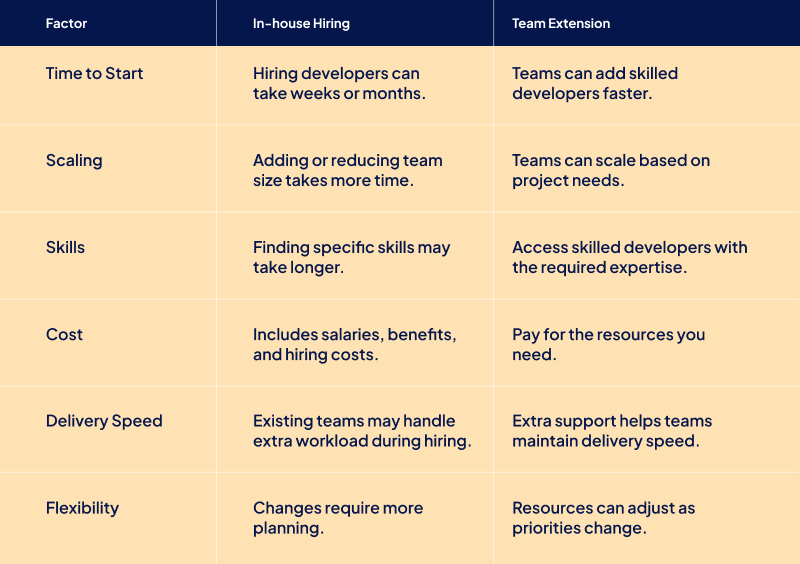
Also Read: How SaaS Companies Scale Engineering Without Expanding Headcount?
How Dedicated Development Teams Help Maintain Sprint Velocity
Dedicated development teams help engineering leaders protect delivery commitments when internal capacity can no longer support the roadmap. They help manage growing workloads, fill skill gaps, and keep product delivery moving.
Protect Sprint Commitments
When teams have more work than they can handle, adding developers helps reduce the workload. It allows existing engineers to focus on their key priorities.
Increase Capacity Without Slowing Delivery
Hiring full-time engineers can take time. Dedicated teams help companies add skilled developers faster when project needs increase.
Access Specialized Skills
Some projects need expertise in areas like cloud, AI, DevOps, or QA. Dedicated teams provide access to these skills without long hiring cycles.
Reduce Team Overload
Extra engineering support helps distribute work across the team. This reduces pressure on existing engineers and helps maintain a healthy workload.
Improve Delivery Speed
Adding the right resources helps teams complete planned work faster. It also helps reduce delays caused by limited engineering capacity.
Support Long-Term Growth
Products need to change as businesses grow. Dedicated teams provide flexible support that can adjust to changing project requirements.
Know When to Extend
Team extension works well when companies need additional skills or faster delivery support. It helps businesses continue progress while planning long-term hiring needs.
Get free consultation and let us know your project idea to turn it into an amazing digital product.
Conclusion
Managing engineering capacity becomes harder as products grow. Teams take on more features, customer needs, and technical work. Without proper planning, sprint goals become difficult to achieve.
Engineering Team Capacity Planning helps leaders understand their team’s workload and plan work more realistically. It helps reduce pressure on engineers and keeps delivery more predictable.
When internal teams need extra support, options like dedicated software development teams can help fill skill gaps and improve delivery speed. The right approach depends on your project needs, timeline, and growth plans.
Better capacity planning helps engineering leaders deliver predictable software without compromising quality.
Frequently Asked Questions
1. How do you calculate team capacity for a sprint?
Ans. Start by checking how many team members are available for the sprint. Then consider planned leave, meetings, and support work. The remaining time shows how much work the team can realistically complete.
2. How can you avoid delivery delays with better sprint capacity planning?
Ans. Plan work based on your team’s actual capacity instead of ideal conditions. Review workloads before every sprint and adjust plans when priorities change. This helps teams make realistic commitments and deliver work on time.
3. How does an understaffed development team affect sprint performance?
Ans. An understaffed team often struggles to complete planned work. Sprint goals become harder to achieve, and unfinished tasks move into the next sprint. This can slow product delivery over time.
4. How can engineering teams identify capacity shortages early?
Ans. Teams should watch for signs like missed sprint goals, growing backlogs, and delayed releases. Finding these issues early makes it easier to adjust workloads before they affect delivery.
5. What metrics should engineering leaders monitor to measure team capacity?
Ans. Engineering leaders should monitor sprint completion, work carried over to the next sprint, team availability, and workload distribution. These metrics provide a clear picture of team capacity and help improve future planning.
6. How do dedicated teams support fast-growing SaaS and product companies?
Ans. Dedicated teams help businesses add skilled engineers without long hiring cycles. They provide extra capacity when workloads increase and support faster product delivery. Many companies also use IT Staff Augmentation Services to quickly fill skill gaps and maintain development speed.
7. How can engineering leaders prevent sprint bottlenecks?
Ans. Sprint bottlenecks can be reduced by planning realistic workloads, assigning work based on skills, and reviewing team capacity before every sprint. Regular planning helps teams stay focused and maintain steady delivery.