

A legacy system can look inexpensive when you only look at its maintenance bill. But the real cost often sits elsewhere:
- Slower releases
- Extra engineering work
- Outdated infrastructure
- Missed opportunities to improve the business
Flexera’s 2026 State of ITAM Report found that only 36% of organizations have complete visibility into their IT assets and their impact on business outcomes.
That lack of visibility can make it difficult to see how much a legacy system is really costing the business.
This article breaks down the legacy system costs that often go unnoticed, when maintenance stops making business sense, and how to decide between modernization and replacement.
Where Legacy Costs Show Up Across the Business
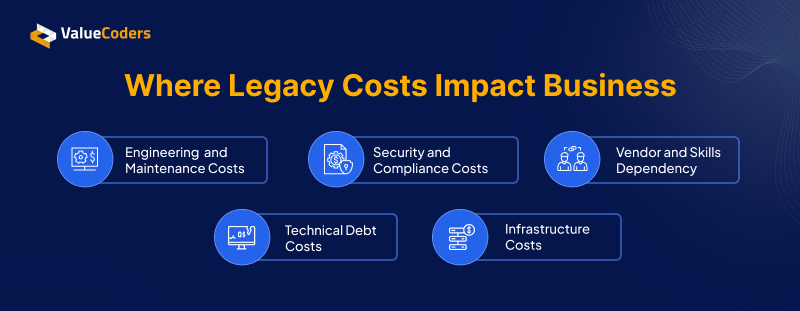
The cost of an older system is not limited to its maintenance bill. As the system ages, small issues can take more time, require more skills, and create more work for the business. Here are the main areas where these costs start to build.
Engineering and Maintenance Costs
Older systems often need more effort to keep running smoothly.
- Frequent bug fixes increase engineering hours
- Fewer developers may have the skills to support older systems
- Small changes can take longer to test and release
- Legacy system maintenance costs can rise without adding new business value
Technical Debt Costs
Quick fixes may solve today’s problem but create bigger problems later.
- Temporary fixes can become permanent
- Tightly connected components make changes harder
- Updates require more testing and planning
- Legacy software costs increase as technical debt grows
Infrastructure Costs
Older applications may depend on infrastructure that is harder and more expensive to support.
- Aging hardware needs more maintenance
- Older hosting environments can limit flexibility
- Support for outdated infrastructure may cost more
- Legacy infrastructure costs can grow as systems become harder to manage
Security and Compliance Costs
Older technology can make security work more difficult
- Unsupported components may not receive regular updates
- Security patches can take more time to apply
- Meeting new compliance requirements can require extra work
- Modernization Services can help address legacy system risks before security gaps become harder to resolve
Vendor and Skills Dependency
Legacy technology can also make businesses dependent on limited resources
- Vendors may stop supporting older products
- Skilled developers can be harder to find
- Specialist support may become more expensive
- Older legacy technology can make future upgrades harder
Identify hidden maintenance costs, reduce technical risks, and find the right path to modernization.
What Legacy Systems Cost Beyond IT
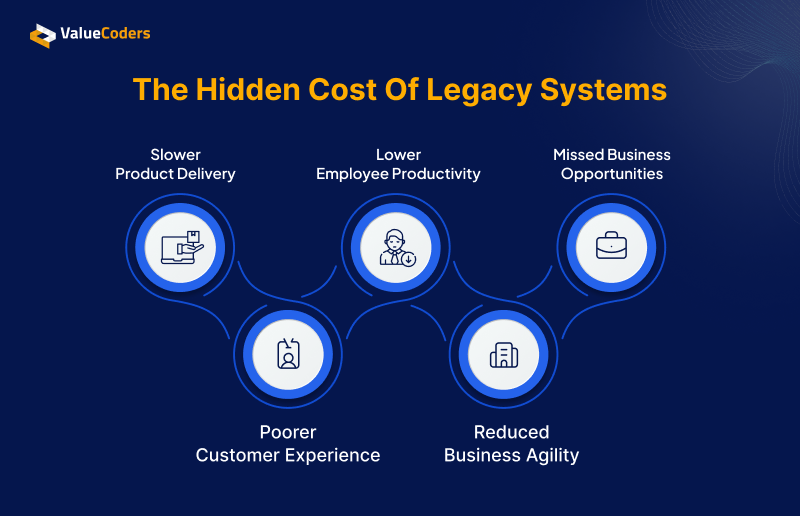
The impact of an older system goes beyond the IT budget. When technology cannot keep up with business needs, teams lose time, customers face more friction, and new opportunities become harder to pursue.
Slower Product Delivery
Legacy systems can make even simple product changes take longer and increase legacy application costs.
- New features take more time to build.
- Testing becomes more complex.
- Releases become harder to plan.
Lower Employee Productivity
When systems cannot support current workflows, teams often find their own workarounds.
- Manual work increases.
- Teams spend more time solving system issues.
- Workarounds make daily processes less efficient.
Missed Business Opportunities
Technology limitations can slow down business plans.
- New integrations take longer to deliver.
- New business models may be harder to support.
- Business expansion can require major system changes.
Poorer Customer Experience
Outdated systems can affect how customers interact with a business.
- Slow applications create frustration.
- Outdated workflows add unnecessary steps.
- Customer-facing improvements take longer to deliver.
Reduced Business Agility
Business needs can change faster than legacy technology can adapt.
- New requirements need more technical effort.
- Technology changes become harder to make.
- Teams remain dependent on older platforms.
Also Read: Why Legacy Systems are Slowing You Down and How to Modernize Them?
When Should You Stop Maintaining a Legacy System?
Maintaining an old system can make sense when it still supports the business well. But when the cost and risks keep growing, it may be time to consider modernization.
Look for these signs:
- Maintenance costs increase without adding business value.
- Engineers spend more time fixing old issues than building new features.
- Security and compliance requirements become harder to meet.
- The system cannot support important business needs.
- Connecting with modern tools and platforms becomes difficult.
- Updates take longer to test and deploy.
One sign may not require immediate action. But when several appear together, it is worth evaluating your modernization options.
Legacy System Replacement vs Modernization
Replacing an old system is not always the best answer. Legacy application modernization can improve existing systems without rebuilding everything from scratch.
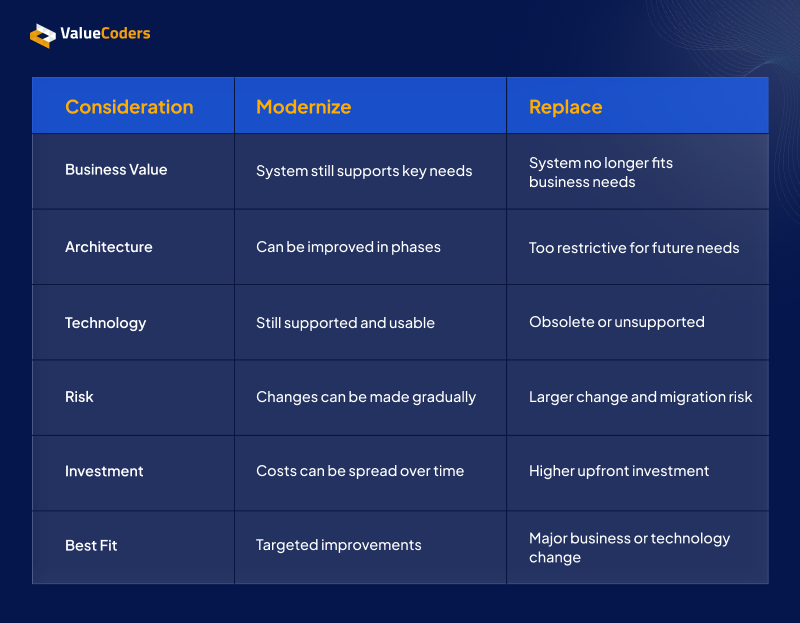
The right choice depends on the system’s value, condition, risks, cost of maintaining legacy systems, and future needs. An old system does not always need to be replaced. Sometimes, the smarter choice is to modernize what already works.
Get free consultation and let us know your project idea to turn it into an amazing digital product.
How to Calculate the Real Cost of a Legacy System
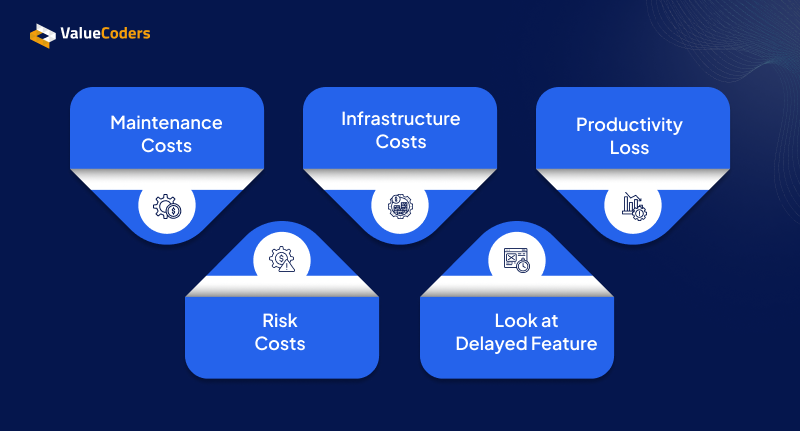
The true cost of a legacy system goes beyond its maintenance budget. Look at five areas to understand its full business impact:
Maintenance Costs
- Include regular fixes, support, licenses, and specialist resources needed to keep the system running.
Infrastructure Costs
- Consider aging hardware, outdated hosting, and the extra resources needed to support older technology.
Productivity Loss
- Account for manual work, slower releases, workarounds, and engineering time spent fixing old issues.
Risk Costs
- Consider Application Migration & Modernization to address security gaps, compliance challenges, system failures, and unsupported technology.
Opportunity Costs
- Look at delayed features, missed integrations, slower expansion, and business opportunities the system may limit.
When Internal Teams Need Modernization Support
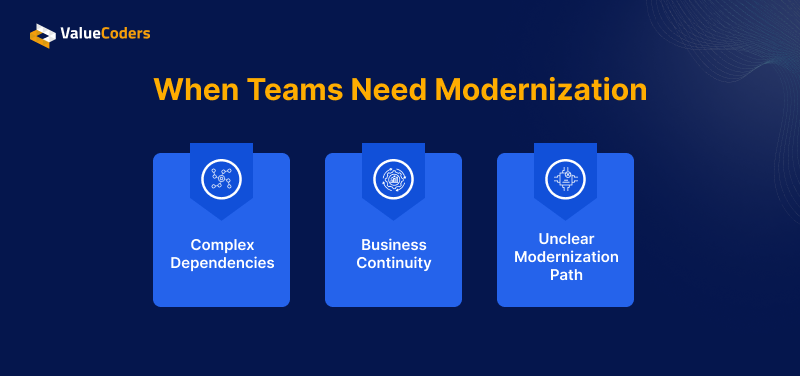
Modernization can be difficult when teams must manage existing systems while planning major changes. Expert support can help when:
Complex Dependencies
- Multiple applications, databases, APIs, or workflows depend on the same system.
Business Continuity
- The system supports critical operations and cannot afford major downtime.
Unclear Modernization Path
- You need to decide whether to upgrade, migrate, modernize, or replace.
The right support can reduce risk and help your team modernize with less disruption.
Also Read: Should You Build, Modernise, or Extend Your Team? A Decision Framework for CTOs
How to Build an Application Modernization Strategy
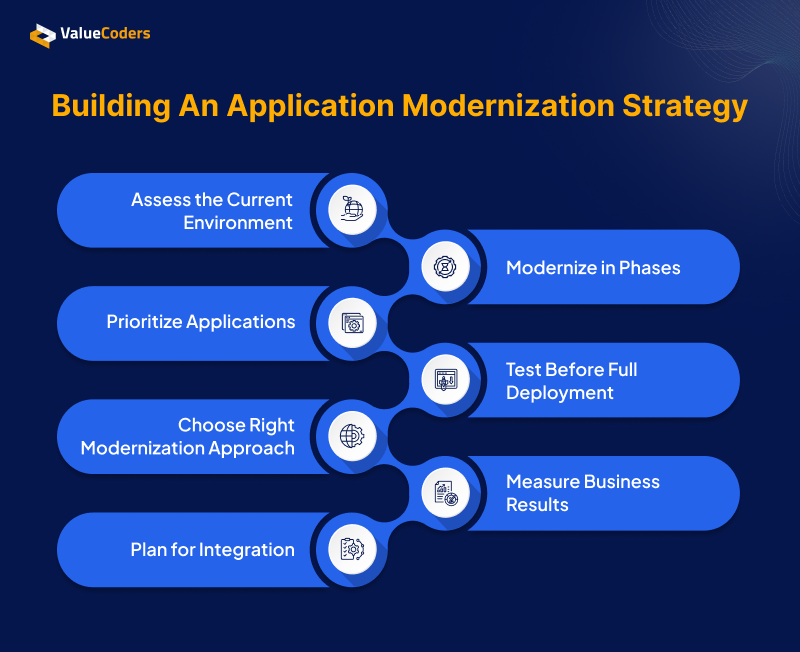
Modernization works best when it follows a clear plan. Instead of changing everything at once, assess what needs to change, prioritize the right systems, and move in controlled steps.
1. Assess the Current Environment
Understand your applications, infrastructure, integrations, dependencies, and critical business workflows.
2. Prioritize Applications
Focus first on systems with high maintenance costs, security risks, business impact, or urgent modernization needs.
3. Choose the Right Modernization Approach
Select the approach that fits each application, such as rehosting, replatforming, refactoring, rebuilding, or replacement.
4. Plan for Integration
Review APIs, databases, third-party tools, and data dependencies before making changes to avoid problems later.
5. Modernize in Phases
Start with high-value areas and make changes in smaller stages to reduce disruption and manage risk.
6. Test Before Full Deployment
Test functionality, performance, security, integrations, and key business workflows before moving changes to production.
7. Measure Business Results
Track maintenance effort, system performance, release speed, reliability, and business results to see whether modernization is delivering value.
A clear modernization strategy helps businesses improve older systems without losing sight of daily operations or long-term goals.
Also Read: Why Do Modernization Projects Fail Before They Start?
Why a Structured Modernization Strategy Delivers Better Business Outcomes?
A clear modernization plan helps businesses reduce risks and achieve better results. It also ensures every investment supports long-term business goals.
- Align technology decisions with business priorities.
- Reduce project delays and unexpected costs.
- Improve system performance and reliability.
- Support future growth with scalable solutions.
- Build a roadmap for successful Digital Transformation Services.
A structured approach helps businesses modernize with confidence while creating long-term value.
Improve security, reduce technical debt, and unlock long-term business value.
Conclusion
The right approach is to evaluate the business value, technical condition, risks, and future requirements of a legacy system before deciding between an upgrade, modernization, migration, or replacement.
ValueCoders helps businesses make that decision with structured application modernization, migration, engineering, and technology expertise.
Whether the right path is a targeted upgrade or a larger transformation, the goal should be the same: reduce unnecessary legacy costs while building a technology foundation that can support the business going forward
FAQs
1. How do legacy systems affect business growth?
Ans. Legacy systems slow progress. They increase costs, reduce flexibility, and make it difficult for businesses to innovate and adapt to changing market demands.
2. When should a business modernize its legacy applications?
Ans. A business should look into Software Consulting Services for modernizing legacy software when maintenance costs rise and performance declines. Increased security risks and the inability to support business goals are also key factors to consider.
3. What are the benefits of application modernization?
Ans. Application modernization enhances performance and strengthens security while lowering maintenance costs. It also helps businesses grow by leveraging modern technology.
4. How can mid-sized businesses modernize legacy systems without disrupting operations?
Ans. Start with the most critical systems first and modernize in phases. Careful planning and testing help reduce downtime and keep daily operations running smoothly.