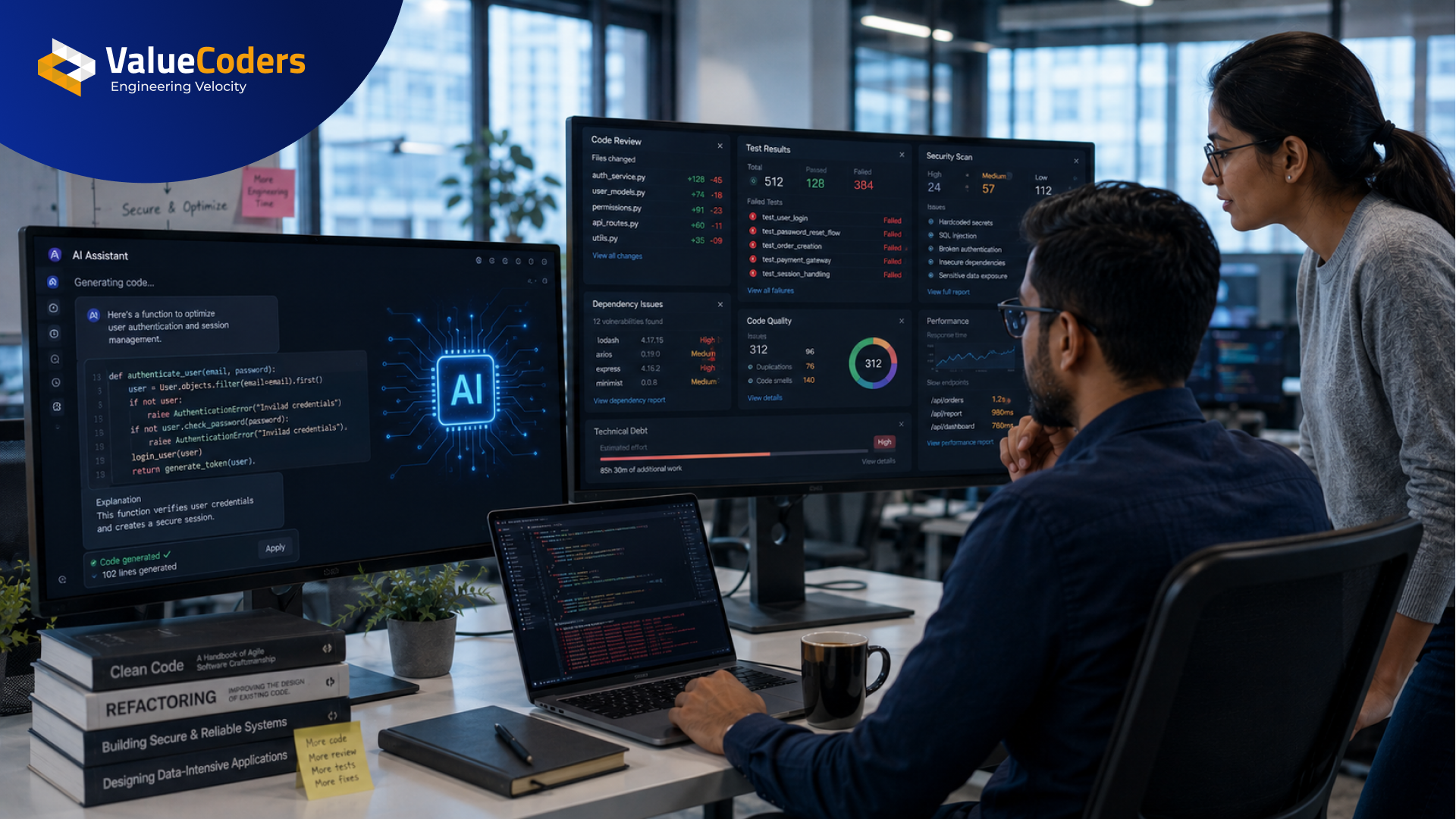

AI has made code generation faster and more accessible than ever. It has fundamentally changed how developers work.
The assumption that followed seemed logical. If AI writes the code, engineering must be getting easier.
- Less coding effort required.
- Lower barriers to entry.
- Smaller teams are needed.
That assumption is wrong. AI is raising the bar for developers by shifting their responsibilities from writing code to making architecture, security, and governance decisions.
In this blog, we’ll explore why AI software engineering demands higher standards than ever. We’ll also examine why engineering governance, AI-generated code quality, and human oversight have become essential for building reliable software.
AI Changed Software Engineering, Not Engineering Standards
AI-assisted development is now part of everyday development. Tasks like repetitive code, test cases, and documentation can now be completed much faster with AI assistance.
The development process has changed. What defines good engineering has not.
Reliable software still depends on:
- Clear system architecture
- Secure coding standards
- Thorough code reviews
- Comprehensive testing
According to the Wiz State of AI in the Cloud 2026 report, 80% of organizations use AI IDE extensions, while 71% use AI assistants during software development.
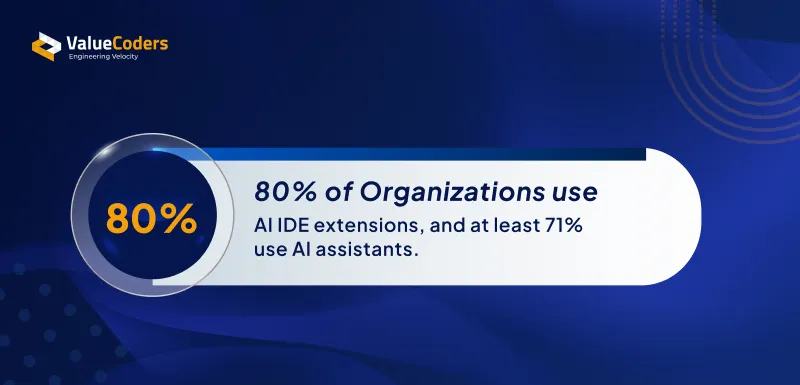
This shows AI-assisted development is becoming the default across engineering teams.
The impact of AI on software engineers is becoming increasingly clear. As AI takes over repetitive coding tasks, engineers are expected to spend more time on architecture, validation, governance, and system-level decision-making.
Also Read – How AI Improves Software Development Efficiency and Innovation
Why Faster Code Doesn’t Always Mean Better Software
AI tools can write code quickly, but that does not mean the output is always reliable. Every suggestion still needs a human review before it reaches production.
As development speeds up, the challenge shifts from writing code to ensuring reliability. Faster output does not reduce engineering effort. It changes where that effort is needed.
Here is why speed alone does not guarantee better software:
- More code means more to review and test
- Faster code generation can hide subtle errors
- Quality checks take time and cannot be rushed
- Skipping validation creates bigger problems later
- Review backlogs grow when output outpaces the team
- Inconsistent code patterns make maintenance harder
- Security gaps become easier to miss
- Technical debt builds faster than teams can track
The table below shows how the workload shifts when AI enters the development process.
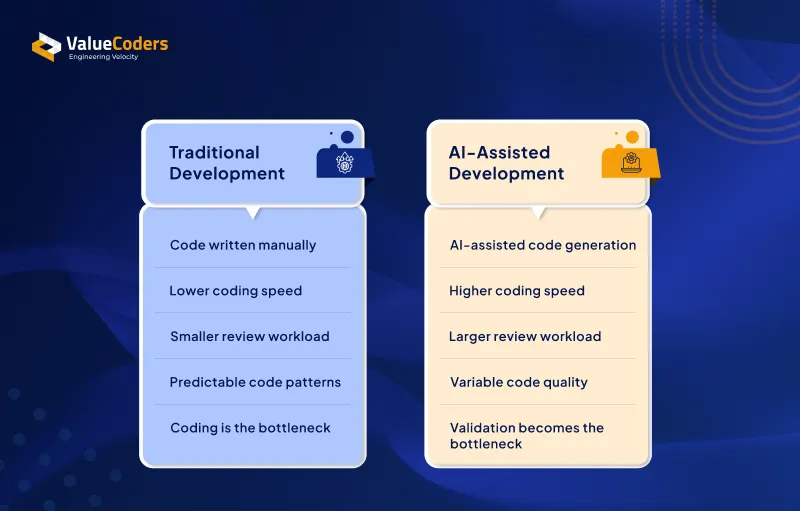
AI-Generated Code Quality Still Depends on Human Review
AI can write code quickly, but it still cannot:
- Understand the business context
- Recognize subtle edge cases
- Make judgment calls about trade-offs
These limitations show that AI-generated code quality is never guaranteed at the point of generation. It must be verified before it reaches production.
Common AI code quality issues include:
- Insecure default configurations that expose systems to risk
- Overly permissive access controls that weaken the security posture
- Maintainability problems that increase long-term cost and effort
Code reviews have always been important with AI-assisted coding; they become essential.
Why AI Engineering Governance Is Becoming Essential
Organizations adopting AI often combine strong engineering governance with AI consulting services to establish secure development practices and long-term technology roadmaps. It brings consistency to the team and clarity to the development process.
Without governance, teams can face common challenges:
- Reviews become inconsistent.
- Security checks get skipped.
- Small issues turn into bigger problems over time.
- Teams lose confidence in production releases.
A strong governance framework helps teams:
- Follow the same review process for every change.
- Catch security and compliance issues early.
- Keep experienced engineers involved in key decisions.
- Apply the same quality standards to all code.
- Define clear ownership and accountability throughout the development process.
Build faster without compromising quality, security, or engineering standards.
The Skills That Matter More in the AI Era
The impact of AI on software engineers extends far beyond faster code generation. Software engineering in the AI era demands more than technical expertise. Engineers are expected to make architectural, security, and product decisions that AI cannot.
Here are the skills software engineers need the most.
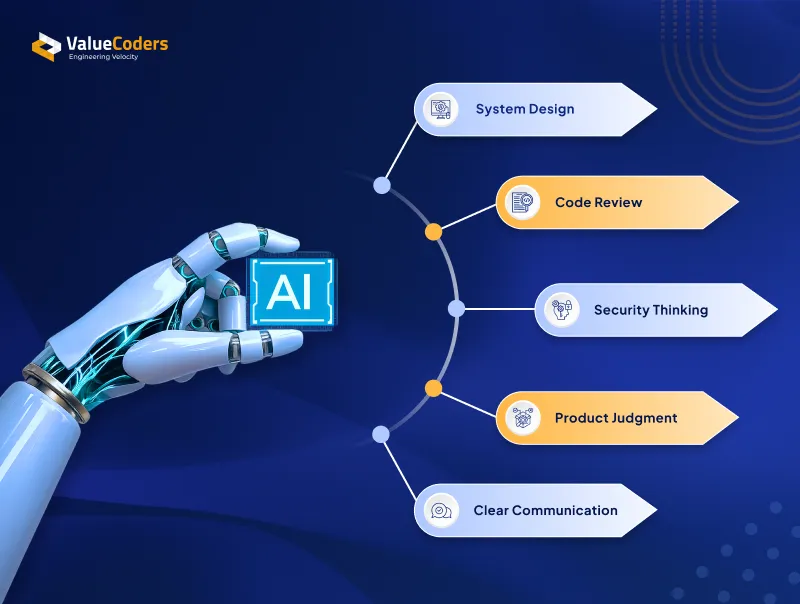
System Design
- Design systems that scale over time
- Connect different components effectively
- Choose the right architecture for the problem
Security Thinking
- Identify security risks early
- Build secure defaults into applications
- Reduce vulnerabilities before deployment
Code Review
- Identify logic errors and edge cases
- Review code for quality and maintainability
- Ensure changes meet engineering standards
Product Judgment
- Solve real business problems
- Balance technical and business priorities
- Make informed trade-off decisions
Clear Communication
- Explain technical decisions simply
- Stay aligned on priorities
- Document decisions for future development
Also Read – AI Readiness Checklist for Tech Companies in 2026
What This Means for Engineering Leaders
Many leaders are asking, “Is AI replacing programmers?” The reality is different. AI is changing how software gets built. It is not replacing engineers. It is raising the expectations for quality, accountability, and technical leadership.
Engineering leaders should focus on:
- Using AI to improve productivity without replacing engineering expertise
- Setting clear standards for reviewing AI-generated code
- Building governance into the development process
- Investing in engineers who can make sound technical decisions
- Measuring quality outcomes instead of just development speed
- Making code reviews a priority, even when output increases
- Establishing clear accountability for every change that reaches production
- Treating AI as a tool that supports the team, not a replacement for it
Conclusion
AI has changed how software gets built, but it has not lowered the need for engineering excellence. It has raised the bar.
Code generation is faster now, but senior engineers and architects remain responsible for validating AI-generated code before production. Governance is no longer optional because it keeps development fast and output trustworthy.
The skills that matter most have shifted toward system design, code review, security thinking, product judgment, and clear communication. Engineers who bring these skills will lead successful teams.
The right approach combines AI speed with strong engineering discipline. AI works best as an accelerator while engineers remain the decision-makers. That balance turns faster development into better software.
At ValueCoders, we help you build AI-powered software with engineering teams that combine AI-assisted development with human oversight, secure delivery practices, and production-ready quality.
Whether you’re adopting AI coding tools, modernizing existing applications, or scaling engineering capacity, our AI Development Services help you build software that’s designed to last.
Strengthen code quality and governance while accelerating software development.
FAQs
Here are answers to common questions about AI software engineering, AI-generated code quality, and AI engineering governance.
1. What is AI software engineering?
Ans. AI software engineering uses AI tools to support tasks like code generation, testing, and documentation. Engineers still review, validate, and approve the final output.
2. Can AI replace software engineers?
Ans. No. AI can assist with coding, but engineers are still responsible for architecture, code quality, security, and technical decisions.
3. What is AI engineering governance?
Ans. AI engineering governance defines how AI-generated code is reviewed, tested, and approved. It helps teams maintain quality, security, and accountability.
4. Why is AI-generated code quality important?
Ans. Poor-quality code can lead to security risks, maintenance issues, and production failures. Human review helps ensure every change meets engineering standards.
5. How can engineering teams improve code quality when using AI?
Ans. Teams should follow consistent code reviews, testing, security checks, and governance practices. The same quality standards should apply to both AI-generated and human-written code.
6. What skills matter most for software engineers in the AI era?
Ans. System design, code review, security thinking, product judgment, and communication are becoming more important. These skills help engineers build reliable software with AI.